Marine fire suppression servicing plays an important role in protecting boats, fishing vessels, commercial marine operations and everyone aboard. Regular inspections and maintenance help ensure onboard fire protection equipment remains in suitable condition and ready for an emergency.
A fire in a vessel’s engine compartment can spread quickly. Unlike emergencies on land, marine incidents may occur far from immediate assistance. Therefore, reliable fire suppression equipment is an essential part of onboard safety.
Automatic marine fire suppression systems help control fires within protected compartments, often without requiring anyone to enter the affected area. However, even the most reliable system needs appropriate inspections and maintenance throughout its service life.
In this guide, SCT Fire & Safety Protection explains what marine fire suppression servicing involves, how often different systems may require attention and which warning signs operators should recognise.
We also explore the maintenance considerations for leisure boats, commercial fishing vessels and marine businesses across Northern Ireland and the Republic of Ireland.
Why Marine Fire Suppression Maintenance Matters
Marine fire suppression systems operate in demanding environments. For example, engine compartments experience temperature changes, vibration, moisture and potentially corrosive conditions. Over time, these factors can affect the condition of cylinders, activation mechanisms and other components.
A marine fire suppression system may remain unused for years. For this reason, regular inspections help ensure the equipment stays ready for an emergency, even when there are no obvious signs of a problem.
Routine marine fire suppression servicing and maintenance can help identify:
- Corrosion, physical damage or deteriorating components.
- Incorrect cylinder pressure indications or loss of extinguishing agent.
- Damaged or obstructed manual activation controls.
- Faults affecting monitoring equipment or shutdown arrangements.
- Changes to the engine compartment that could compromise the original system design.
- Missing maintenance records, operating instructions or identification details.
Identifying these issues early gives vessel owners an opportunity to arrange appropriate corrective action before an emergency occurs.
How Often Should Marine Fire Suppression Systems Be Serviced?
There is no universal servicing interval for every marine fire suppression system. Instead, the correct schedule depends on the manufacturer, system model, vessel operating category and applicable regulatory requirements.
In addition, flag-state rules, vessel surveys, classification requirements and insurance conditions may influence the maintenance programme.
It is important to distinguish between routine inspections that operators can perform and technical servicing that requires a competent specialist.
Routine Operator Inspections
Boat owners and vessel operators should follow the inspection schedule specified for their installed equipment.
Routine checks may include confirming that the system remains correctly positioned, pressure indications are within the manufacturer’s acceptable range and visible components show no signs of damage or obstruction.
For example, a published UK Maritime and Coastguard Agency approval for certain Sea-Fire pre-engineered systems refers to weekly user inspections in accordance with the manufacturer’s instructions.
However, operators must always check the approval and documentation applicable to their own equipment and vessel.
Periodic Technical Servicing
Professional marine fire suppression servicing may involve detailed cylinder inspections, verification of extinguishing agent quantity, examination of activation mechanisms and checks of associated control equipment.
For instance, one published Sea-Fire NFG/NFD installation and maintenance manual specifies maintenance activities that include:
- Six-monthly cylinder weighing.
- Inspection of pressure gauge indications.
- Inspection of manual activation cables.
These requirements apply to the models covered by that particular manual. Therefore, they do not establish a universal six-month servicing interval for every marine fire suppression system.
Furthermore, some maintenance activities require appropriately trained or authorised personnel. Unqualified operators should never attempt specialist servicing or dismantle pressurised equipment.
The safest approach is to maintain a documented servicing programme based on the actual equipment installed aboard your vessel.
What Does a Marine Fire Suppression Inspection Involve?
A thorough inspection considers the condition of the suppression equipment and the environment it protects. However, the exact procedures depend on the manufacturer and system design.
The following seven areas are particularly important.
1. Cylinder Condition and Identification
The fire suppression cylinder is a critical part of the installation. During an inspection, a competent specialist should assess its condition, mounting arrangements, identification markings and relevant maintenance history.
Potential warning signs include:
- Excessive corrosion or deterioration.
- Mechanical damage to the cylinder.
- Loose or insecure mounting brackets.
- Missing or illegible identification labels.
- Unclear or incomplete servicing records.
Cylinder specifications vary considerably. For example, some cylinders are non-refillable, while others may qualify for servicing, refilling or testing, depending on their design and condition.
Never assume that an ageing or damaged cylinder can simply be refilled. Instead, a competent specialist should establish the correct course of action using the manufacturer’s requirements.
2. Pressure Indications and Extinguishing Agent Quantity
Where fitted, a pressure gauge provides useful information about the condition of a marine fire suppression cylinder.
However, operators must interpret pressure readings according to the manufacturer’s instructions. Temperature can influence indicated pressure, and a normal gauge reading does not necessarily confirm that the cylinder contains the correct quantity of extinguishing agent.
Some liquefied-gas marine suppression systems require periodic weighing to verify agent quantity.
Therefore, only suitably competent personnel should carry out these procedures, following the manufacturer’s instructions and appropriate safety precautions.
3. Automatic Detection and Activation Components
Many pre-engineered marine fire suppression systems activate automatically when a heat-sensitive mechanism reaches a specified temperature.
These components must remain in their intended condition and location to support reliable operation.
During inspections, specialists should look for visible damage, contamination, deterioration or unauthorised modifications.
Furthermore, operators must never attempt to simulate a fire, trigger a discharge mechanism or dismantle pressurised components to test the system.
4. Manual Activation Arrangements
Some marine suppression systems include a manual release mechanism. This allows an operator to activate the system from a suitable position outside the protected compartment.
Where fitted, the manual release cable, handle, routing and associated components require inspection in accordance with the manufacturer’s instructions.
For example, a damaged, obstructed or incorrectly routed cable could prevent the system from activating when needed.
Consequently, any functional testing must follow the correct isolation and safety procedures to prevent accidental discharge.
5. Engine and Ventilation Shutdown Arrangements
Certain marine fire suppression installations incorporate automatic shutdown arrangements for engines, generators or powered ventilation.
These interfaces can help maintain the extinguishing agent concentration within a protected engine compartment.
However, if ventilation continues running or an engine draws air from the protected space, the suppression system may not perform as intended.
Where shutdown equipment forms part of the approved installation, a competent specialist should review its condition and operation.
In addition, all testing must follow the manufacturer’s instructions and the vessel’s safety procedures.
6. Changes to the Protected Compartment
Marine fire suppression servicing should also consider whether the protected compartment has changed since the original installation.
Common modifications include:
- Replacing an engine or making significant machinery alterations.
- Installing additional ventilation equipment.
- Changing access hatches or compartment openings.
- Modifying the dimensions of the protected space.
- Replacing or repositioning major onboard equipment.
As a result, these alterations can affect the assumptions used to design and select the original fire suppression system.
For instance, a cylinder that provided suitable protection before a modification may no longer meet the requirements of the altered compartment.
Therefore, following significant changes, operators should arrange a review of the system design rather than relying solely on the original installation specification.
7. Instructions, Signage and Maintenance Records
Effective marine fire protection involves more than installing the correct equipment.
Vessel operators should understand which system they have, how to interpret its indicators and where to find any manual activation controls.
Important documentation includes:
- Manufacturer operating instructions.
- Original installation documentation.
- Inspection and servicing records.
- System identification and technical information.
- Relevant maintenance and repair reports.
In addition, commercial vessel operators can use these records to support planned maintenance, regulatory inspections and survey preparation.
Five Warning Signs Your Boat’s Fire Suppression System Needs Attention
Boat owners should not wait until the next scheduled service when they suspect a fault.
Therefore, arrange a professional assessment if you notice any of the following warning signs:
- Abnormal pressure indications: A gauge reading outside the manufacturer’s acceptable range, after accounting for temperature, may indicate a problem.
- Corrosion or visible damage: Rust, damaged pipework, insecure brackets or deteriorating components require attention.
- Fault or missing status indications: Unexpected warnings or missing normal indications may suggest a monitoring or system fault.
- Damaged or obstructed release arrangements: Manual activation controls must remain accessible and in the condition specified by the manufacturer.
- Unknown maintenance history: If you purchase a second-hand vessel and cannot establish its servicing history, arrange an appropriate professional inspection.
Where there is doubt about the system’s condition, operators should not assume it remains fully operational until a competent person has assessed and resolved the issue.
What Happens After a Marine Fire Suppression System Discharges?
If a fixed fire suppression system activates, the immediate priority is the safety of everyone aboard.
First, follow the vessel’s emergency procedures. Do not enter or reopen the protected compartment until it is safe. In particular, consider the risk of fire, re-ignition, hazardous atmospheres and any relevant emergency instructions.
Once the incident is under control, a competent specialist must assess the suppression system before anyone relies on it again.
Depending on the equipment, the work may involve:
- Replacing a discharged non-refillable cylinder.
- Arranging authorised recharging where permitted.
- Inspecting activation mechanisms and associated components.
- Checking the cause and consequences of the discharge.
- Completing appropriate repairs and recommissioning.
Finally, all replacement, repair and recommissioning work must follow the manufacturer’s requirements.
Marine Fire Suppression for Leisure and Commercial Vessels
Different vessel types require different approaches to onboard fire protection.
For example, a privately owned leisure boat with a compact enclosed engine compartment may use a relatively straightforward pre-engineered suppression system.
In contrast, larger fishing vessels, commercial workboats and yachts may require more complex arrangements. These can incorporate additional detection, manual activation, monitoring and equipment shutdown functions.
Commercial operators must also consider the rules associated with their vessel’s registration, operating category and applicable certification.
The UK’s Maritime and Coastguard Agency provides guidance on maintaining fire protection equipment aboard ships. However, the specific requirements depend on the vessel and installed equipment.
Similarly, for vessels operating under Irish requirements, operators should consider the applicable Irish Maritime Administration rules and relevant marine guidance.
Therefore, a suppression system suitable for one vessel should never automatically be considered suitable for another.
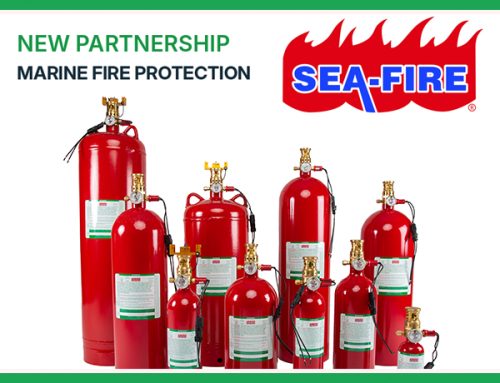
Sea-Fire Marine Fire Suppression Systems
SCT Fire & Safety Protection is an appointed dealer and installer for Sea-Fire Europe Ltd, bringing specialist marine fire suppression solutions to customers across Northern Ireland and the Republic of Ireland.
Sea-Fire manufactures systems specifically developed for marine applications. Its product range includes pre-engineered solutions for defined machinery compartments and custom-engineered systems for larger or more complex protected spaces.
Depending on the selected system, available features may include:
- Automatic fire suppression activation.
- Manual release arrangements.
- System monitoring and status indications.
- Integration with engine and ventilation shutdown equipment.
- Solutions for different vessel types and machinery spaces.
The correct system depends on the vessel, its operating requirements and the specifications of the compartment requiring protection.
For further information, read about SCT’s appointment as a Sea-Fire dealer and installer, or explore the Sea-Fire Europe product range.
You can also explore SCT’s wider fire suppression solutions for other specialist applications.
Planning Marine Fire Suppression Servicing Before the Boating Season
The period before a vessel returns to regular operation provides an ideal opportunity to review its fire protection arrangements.
Boat owners should establish when the system last received an inspection, locate the relevant documentation and check whether any maintenance activities are overdue.
In addition, if a vessel has undergone winter refurbishment or mechanical work, operators should consider whether those changes have affected the protected compartment or connected control equipment.
Commercial marine operators can incorporate fire suppression maintenance into their wider planned maintenance programmes. As a result, this helps coordinate technical inspections, vessel access and operational schedules.
Rather than treating fire suppression as an isolated piece of equipment, operators should include it within their overall onboard fire safety arrangements.
Marine Fire Suppression Servicing and Support in Northern Ireland & Ireland
SCT Fire & Safety Protection works with customers across Northern Ireland and the Republic of Ireland, providing specialist fire protection solutions for a range of applications.
With the addition of Sea-Fire marine systems, SCT welcomes enquiries from:
- Private boat and yacht owners.
- Commercial fishing vessel operators.
- Workboat and marine fleet operators.
- Marinas and boatyards.
- Commercial marine businesses.
- Vessel maintenance and engineering providers.
Whether you need a new marine fire suppression installation, are considering replacing an existing system or require guidance on maintenance, SCT can discuss your requirements and identify the appropriate next steps.
For existing equipment, the available inspection and servicing arrangements depend on the manufacturer, model and any required specialist authorisations.
Contact SCT About Your Marine Fire Suppression Requirements
Are you concerned about the condition of your vessel’s fire suppression system? Perhaps you are planning an upgrade or need advice about a new installation.
Contact SCT Fire & Safety Protection to discuss your marine fire suppression requirements.
When making an enquiry, it helps to provide the system manufacturer and model, photographs of the cylinder, vessel details and any available maintenance documentation.
Our team can then review the information and discuss the most appropriate next steps for your vessel.
Telephone: 028 7744 5079
Email: info@sct-ni.com
Online: Contact the SCT Team
SCT Fire & Safety Protection – Protecting People, Property & Assets.