A fire aboard a boat can become dangerous very quickly. Unlike a fire on land, space is limited, escape routes may be restricted, and emergency assistance can be some distance away. That’s why choosing suitable boat fire suppression equipment is so important.
Portable fire extinguishers and fixed fire suppression systems both help protect vessels. However, they serve different purposes. Understanding those differences can help boat owners, operators and marine businesses make informed decisions about fire safety.
In this guide, SCT Fire & Safety Protection explains how the two approaches work, their advantages and limitations, and what to consider when protecting a vessel.
Boat Fire Suppression: Portable vs Fixed Systems
Portable fire extinguishers allow someone to tackle a small fire when it is safe to do so. In contrast, a fixed fire suppression system protects a designated area, such as an engine compartment, without requiring someone to enter that space to discharge a handheld extinguisher.
Both approaches can form part of a vessel’s overall fire safety arrangements. However, the most suitable equipment depends on the vessel’s design, machinery, operating conditions and applicable safety requirements.
Portable Fire Extinguishers
Portable extinguishers provide a practical way to respond to certain small fires during their early stages. They are commonly positioned in accessible locations so that users can reach them quickly.
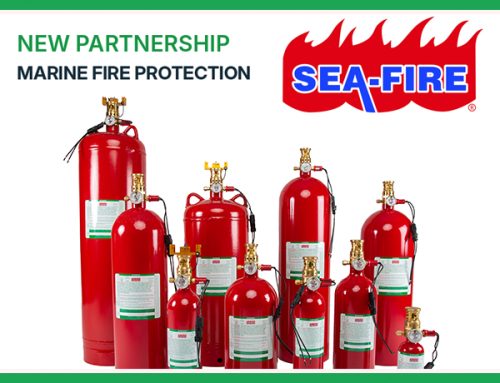
Depending on the fire risks and equipment involved, suitable extinguisher types may include:
- Water-based extinguishers: Suitable for specified Class A fires involving solid materials, subject to the extinguisher’s rating and intended use.
- Foam extinguishers: Suitable for certain solid-material and flammable-liquid fires, depending on their approval and rating.
- Carbon dioxide (CO2) extinguishers: Often used for certain electrical equipment hazards, although their limitations in confined spaces require particular care.
- Dry powder extinguishers: Effective for specified fire classes but capable of reducing visibility, creating breathing difficulties and leaving substantial residue.
Importantly, no single extinguisher type is appropriate for every fire. Boat owners should therefore select equipment according to the actual hazards, the manufacturer’s instructions and any applicable marine requirements.
Fixed Fire Suppression Systems
Fixed systems protect specific spaces or equipment. For example, a properly designed marine fire suppression system may protect an enclosed engine compartment containing fuel, hot surfaces and electrical components.
Depending on the system, it may detect a fire and discharge automatically, provide manual activation, or offer both options.
Unlike a portable extinguisher, a fixed system can discharge its extinguishing agent into a protected compartment without requiring someone to open the space during a fire.
As a result, it can reduce the need for direct intervention in an area where opening access panels or hatches could introduce additional oxygen and worsen the situation.
Nevertheless, a fixed boat fire suppression system must suit the compartment, its hazards and the vessel’s operating conditions. Correct design, installation and maintenance are essential.
Key Differences Between Portable and Fixed Fire Suppression
Although both types of equipment help manage fire risks, they differ in how they operate and where they provide protection.
| Feature | Portable Extinguishers | Fixed Suppression Systems |
|---|---|---|
| Operation | Handheld, manually operated | Automatic, manual or both, depending on design |
| Protection | Suitable accessible fire hazards | A designated compartment or protected area |
| Human intervention | Requires someone to approach and operate the extinguisher | May operate without direct intervention |
| Typical application | Small fires in accessible areas | Engine rooms and other suitable enclosed machinery spaces |
| Maintenance | Inspection and servicing appropriate to the equipment | System-specific inspection, servicing and checks |
Therefore, the decision is not simply about choosing the more powerful option. Instead, it involves understanding the risks and selecting equipment that provides appropriate protection.
Why Boat Fire Suppression Is Important for Engine Compartments
Engine compartments present particular challenges for marine fire protection. They often contain fuel lines, electrical equipment, moving machinery and hot engine surfaces within a relatively small space.
Furthermore, access may be difficult during an emergency. Opening a compartment to investigate a suspected fire can also introduce fresh air, potentially increasing fire intensity.
A suitable fixed boat fire suppression system can help protect an enclosed machinery space by discharging the appropriate agent into the protected area.
However, its effectiveness depends on several factors, including:
- The size and layout of the protected compartment.
- The type and quantity of potential fuel sources.
- The extinguishing agent and system design.
- Ventilation openings and compartment integrity.
- Appropriate detection and activation arrangements.
- Any required engine or ventilation shutdown measures.
- Correct installation and ongoing maintenance.
For example, a system designed for one engine compartment may not provide suitable protection for another compartment with a different volume or ventilation arrangement.
Consequently, system selection should always follow the manufacturer’s requirements and a proper assessment of the intended application.
Can Portable Fire Extinguishers Replace a Fixed System?
Not necessarily. Portable extinguishers and fixed systems serve different functions, so one should not automatically be considered a substitute for the other.
A portable extinguisher may be useful for a small, accessible fire. However, using one to tackle a fire inside an enclosed engine compartment could require opening the compartment and exposing the operator to additional hazards.
In contrast, a suitable fixed system may discharge into the compartment without requiring direct access.
Even so, a fixed system generally protects only the area for which it was designed. It does not automatically provide fire protection throughout the entire vessel.
For this reason, many vessels benefit from a combination of appropriate portable extinguishers and specialist fixed boat fire suppression, where required by their risks or applicable standards.
Choosing the Right Boat Fire Suppression Equipment
Before selecting fire protection equipment, boat owners and operators should consider how the vessel is used and where fires could occur.
1. Identify the Main Fire Hazards
Start by reviewing the engine, fuel systems, electrical installations, cooking facilities and other potential ignition sources.
For example, a small leisure boat may have different protection needs from a commercial vessel with multiple machinery compartments.
2. Consider the Vessel’s Layout
Next, assess compartment sizes, accessibility, ventilation and escape arrangements.
These details can affect both the suitability of portable equipment and the design of a fixed system.
3. Check Applicable Requirements
Fire safety requirements can vary according to the vessel’s type, size, registration, operating area and commercial or recreational use.
Therefore, owners should check the relevant maritime rules, insurance conditions and any applicable survey or certification requirements.
For UK vessels, guidance from the Maritime and Coastguard Agency may be relevant.
For vessels operating under Irish requirements, the Department of Transport provides access to maritime safety information.
4. Select Suitable Equipment
Choose extinguishers and fixed systems that match the identified hazards and relevant technical requirements.
In particular, fixed systems should have the correct capacity, extinguishing agent, activation method and installation arrangements for their intended application.
5. Plan for Inspection and Maintenance
Finally, consider how the equipment will be inspected, tested and serviced throughout its working life.
Even a correctly installed system may become less reliable if owners neglect maintenance or make changes to the protected compartment without reviewing the system.
Maintaining Boat Fire Suppression Equipment
Regular inspection and maintenance help ensure that boat fire suppression equipment remains ready for use.
For portable extinguishers, this may include checking their condition, accessibility, pressure indicators where fitted, service status and signs of damage.
Meanwhile, fixed suppression systems require checks appropriate to their design and manufacturer’s instructions.
These may include:
- Inspecting cylinders, mounting brackets and accessible components.
- Checking pressure or agent quantity where applicable.
- Examining discharge pipework and nozzles.
- Checking detection and activation components.
- Reviewing warning indicators and associated controls.
- Confirming that changes to machinery or compartment layout have not affected system suitability.
- Recording maintenance and identifying required corrective work.
Additionally, owners should follow the servicing intervals and procedures specified for their particular equipment.
For more information, read our guide to Marine Fire Suppression Servicing: Inspection & Maintenance.
Marine Fire Suppression from SCT Fire & Safety Protection
SCT Fire & Safety Protection provides specialist boat fire suppression solutions for suitable marine applications throughout Northern Ireland and the Republic of Ireland.
As an appointed Sea-Fire Europe dealer and installer, SCT can help customers explore marine fire suppression options for appropriate vessels and engine compartments.
Our team can discuss:
- Suitable fire suppression systems for marine machinery spaces.
- System selection and installation requirements.
- Protection for appropriate engine and auxiliary machinery compartments.
- Inspection and maintenance requirements.
- Existing system condition and potential upgrade needs.
Furthermore, SCT provides portable fire extinguisher servicing and maintenance under its independently certified BAFE SP101 scheme, within the scope of that certification.
For boat owners and operators, this provides access to specialist advice on both portable firefighting equipment and fixed marine suppression arrangements.
Frequently Asked Questions About Boat Fire Suppression
Do I Need a Fixed Fire Suppression System on My Boat?
That depends on the vessel’s type, size, use, operating conditions and applicable requirements. Some vessels may need fixed protection under relevant rules or certification arrangements. Others may choose it as an additional safety measure. Therefore, owners should check the requirements for their particular vessel.
Are Portable Fire Extinguishers Enough for an Engine Compartment?
Not always. Although portable extinguishers are valuable for suitable accessible fires, they may not provide an appropriate way to tackle a fire inside an enclosed engine compartment. A properly designed fixed system can offer protection without requiring someone to open the compartment during a fire.
Can Boat Fire Suppression Systems Activate Automatically?
Yes. Some fixed marine systems can activate automatically when specified conditions occur. Others provide manual activation or combine both methods. However, the available functions depend on the particular system.
How Often Should Marine Fire Suppression Systems Be Serviced?
Servicing requirements vary by manufacturer, system type and applicable marine rules. Consequently, owners should follow the relevant maintenance instructions and arrange suitable professional servicing when required.
Does a Fixed System Replace Every Portable Extinguisher?
No. A fixed system normally protects a designated compartment or hazard. Portable extinguishers may still be necessary elsewhere on the vessel, depending on its layout, fire risks and applicable requirements.
Does SCT Provide Marine Fire Suppression in Northern Ireland and Ireland?
Yes. SCT provides specialist marine fire suppression solutions for suitable applications in Northern Ireland and the Republic of Ireland. Contact our team to discuss the vessel, location and type of protection required.
Get Advice on Boat Fire Suppression
Choosing between portable extinguishers and fixed fire suppression systems is an important part of protecting a vessel. However, the most effective approach often involves understanding how both types of equipment can work together.
Whether you’re protecting a leisure boat, commercial vessel or specialist marine installation, SCT Fire & Safety Protection can discuss suitable options for your requirements.
Contact SCT Fire & Safety Protection today:
Telephone: 028 7744 5079
Email: info@sct-ni.com
Online: Contact SCT / Request a Quote
SCT Fire & Safety Protection — Protecting People, Property & Assets.